











David Ruether
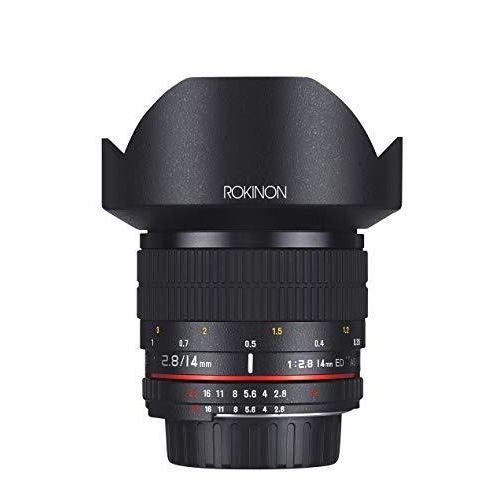
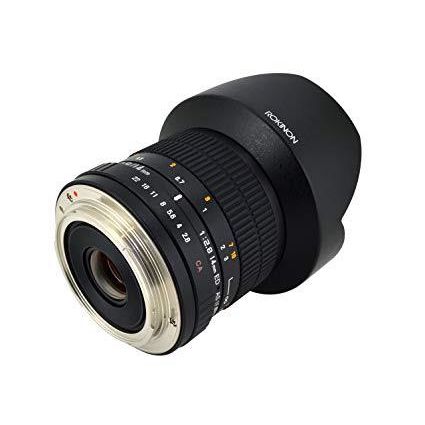
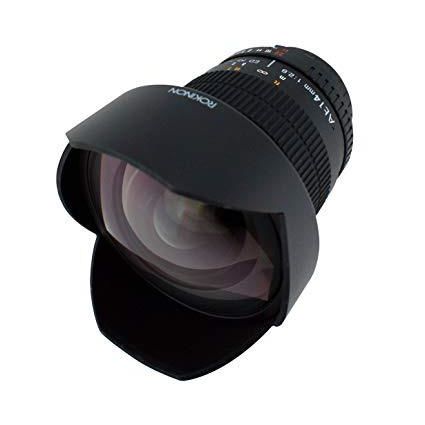
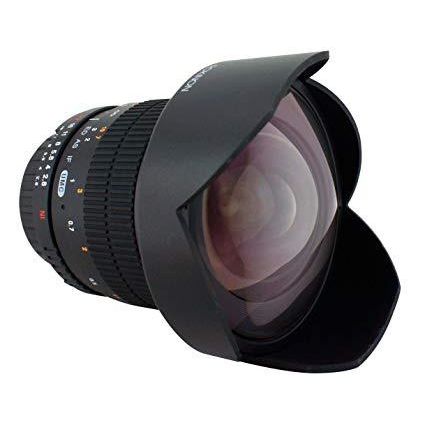
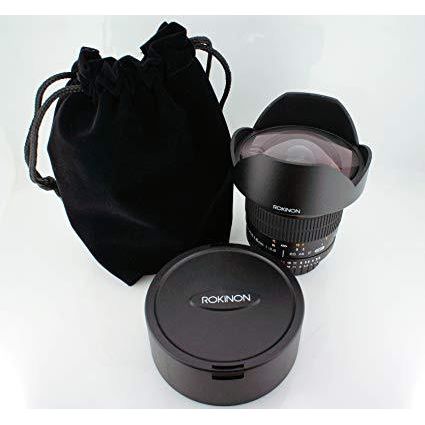
I bought this lens for a specific and unusual purpose: to use it on a Nikon-to-MFT lens-shifting adapter for shooting architecture. Lens-shifting is useful when it is desirable to place the subject horizon line somewhere other than in the image center while still maintaining the verticality in the image of subject verticals (such as those of buildings, trees, etc.). This feature is an inherent part of many large-format cameras such as sheet-film "view" cameras and a few other types. With most small-format cameras, this function can be purchased in the form of lenses specifically made with this feature included, often called "PC" ("perspective control") or "T/S" ("tilt/shift") lenses. Unfortunately, at this point there are no available PC lenses made that can be fitted directly to micro 4/3rds cameras, and ones that can be adapted are not wide enough in coverage to be useful (there is little point in shifting "longish" lenses since the resulting effect would be minimal, and it can be more easily applied later to such images using photo editing software). I ordered the interesting Kipon adapter that permits perspective-control lens-shifting with Nikon-mount 35mm lenses for the purpose of making my own PC lens. Noted earlier (when checking my many Nikkor full-frame lenses on a non-shifting adapter on the MFT format) was that most of the wide-angle lenses I owned for the 35mm full-frame format unexpectedly showed considerable CA problems, and some also showed (VERY unexpectedly!) considerable edge softness. Adapted lenses 50mm and longer fared better, and with some of those Ive used a lens tilting adapter. I bought this Kipon shift adapter specifically to use with the Samyang 10mm f2.8 (DX-format) lens in Nikon mount, but when that lens finally appeared, it was too expensive for my purposes, it appeared to be too limited in coverage to be very useful, and the first review of it indicated that it may not be good enough to use for making a PC lens. I decided to return to an earlier idea of using this adapter with the (potentially...) very sharp Samyang/Rokinon 14mm f2.8 lens for a 28mm-equivalent PC lens, even though its linear distortion is quite severe (as is sample-variation with this manufacturer, and it took three tries to get a good sample of this 14mm). This combination has worked surprisingly well, and even when using the full available lens shift of about 10mm (20mm-equivalent for the 35mm full-frame format, which permits placing the horizon line outside of the frame edge regardless of orientation, which no other PC lens can do), the far edges and corners are sharp by f8-f11 (depending on the amount and direction of shift - and with a good sample of this lens). I do sometimes need to make some linear distortion corrections during the editing of photos of buildings with strong vertical lines, but this usually takes an unexpectedly minor amount of work, if its needed at all. This lens is rather large and heavy, and therefore somewhat awkward to use on small MFT cameras, but it does perform well for this use. It also performs well with infrared photography (and not all lenses do). More lens reviews (with samples) are here: http://www.david-ruether-photography.com/MFT-Lenses.htm --DR