















Cornieleous
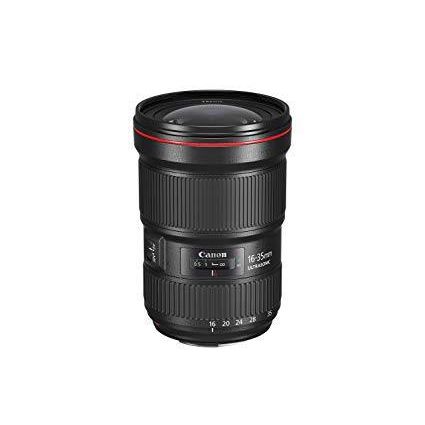
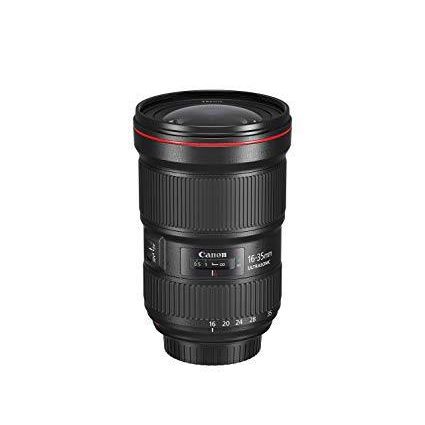
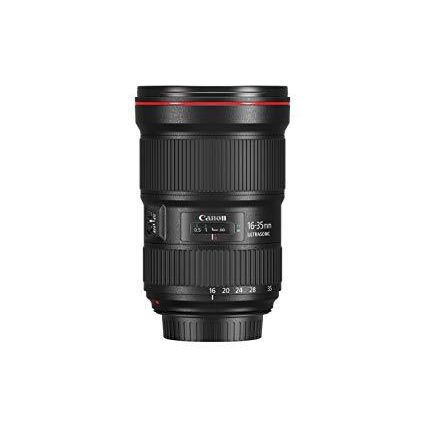
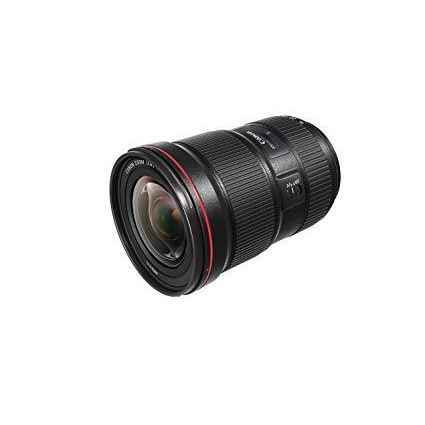
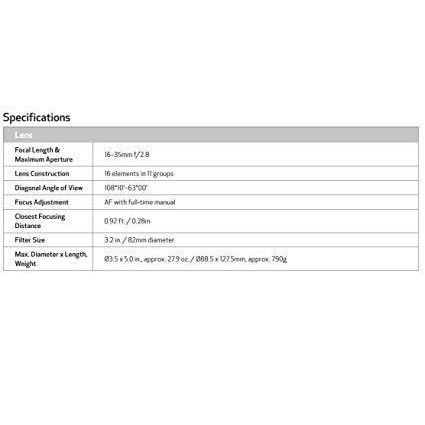
UPDATE: After a few days with the lens, I decided to return it and lower the score. SUMMARY: Amazingly sharp lens but it may not be useful for really low light, night, or video work due to severe vignetting - over four stops of light lost at the corners! In low light or dark scenes such bad vignetting will become ugly noise when corrected, even on Canons latest sensors and with the best denoise plugins. See the attached images (unedited RAW exported to JPEG) comparing it against a prime at 24mm in daylight and then against a prime and a competing zoom at ~16mm at night. The vignetting is obvious and awful. If you stop this lens down to 4 or 5.6, vignetting issue is mostly gone, but this defeats the purpose of an F2.8 lens that most of us buy to shoot wide open in low light. If you can get by with the F4 IS version of the 16-35mm, you save a stack of cash and gain image stabilization and a lighter lens that can take smaller filters and is very sharp as well. ORIGINAL REVIEW: This is the sharpest F2.8 ultrawide zoom on the market. It also takes screw on filters. The advantage of the F2.8 aperture is mostly wasted on the severe vignetting. While incredibly sharp this lens will NOT be suitable for astrophotography or truly low light use at F2.8 despite the very low coma and aberrations. If you care about dark corners or noise and detail loss in the corners after software correction, this lens will not be for you - that is its only real flaw unless you count lack of image stabilization against it, which we all wanted and maybe expected. If you shoot in bright daylight or even in moderate light and have plenty of signal in the corners and edges, software will remove vignetting and you will probably never care - JPEG shooters may not ever know about vignetting since the camera applies the correction before you ever see the image. If you take night or deep shadow photos though, prepare for noise in the corners due to the awful vignetting. Some of the reviewers think this lens is the same as the previous version. I find this wildly not accurate. The performance differences are blatant.This lens is WAY sharper than the version 2 in the corners and throughout the frame, but vignettes harder than the version 2 by 1-1.5 stops. This lens is sharper than the legendary Nikon 14-24mm F2.8 and takes filters, but has double the vignetting of the Nikon. The few competing lenses that are this sharp are all F4, or have bulbous front elements that are expensive and difficult to add filters to. The engineering compromises make it almost impossible to make one F2.8 lens this sharp that can do everything. So, this is a fine lens but has drawbacks for my shooting style. I am electing to return this lens and buy two lenses: a Tamron 15-30mm F2.8 and a Canon 16-35mm F4. This gives me TWO wide lenses covering 15-35mm, both with image stabilization, both nearly as sharp, and together cost the same as this lens. Both with their image stabilization can do slow handheld daytime stuff but the Tamron specifically excels at astrophotography as it has low vignetting and coma aberration. The Canon 16-35 F4 will do my daytime duty only for landscapes where I would never want the F2.8 anyway, plus its lighter and takes smaller filters, a plus for travel.