













Ken Barlow
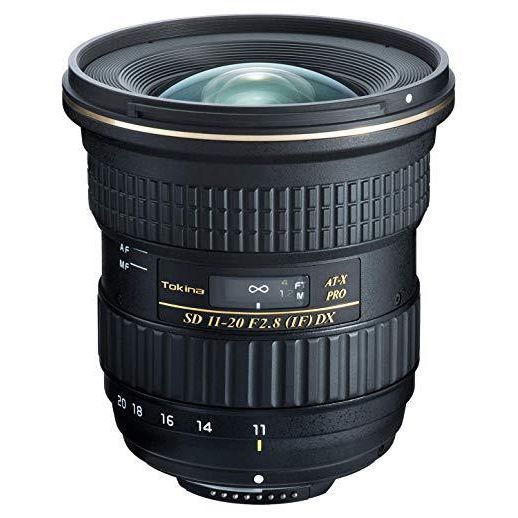
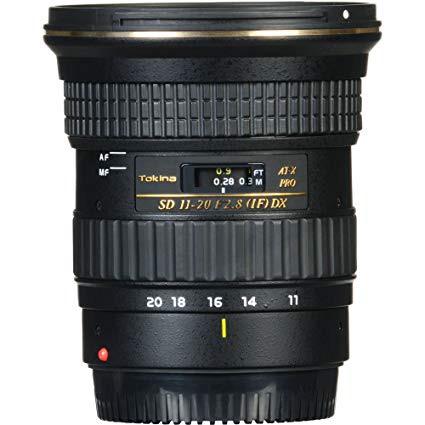
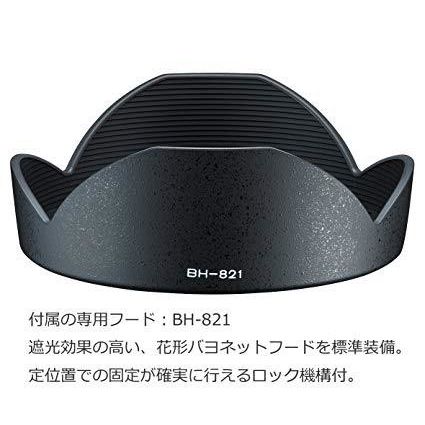
Firstly, I have also owned the Tokina 11-16 f2.8 (first version without focus motor) and the Tokina 12-28 f4. I found the 11-16 too limiting in zoom range and replaced it with the 12-28. The 11-16 was always extremely sharp at all focal lengths and apertures, but also had a lot of flare. The 12-28 was less sharp and needed to be stopped down to about f5.6 to be as sharp as the 11-16 was wide open. It also exhibited quite a bit of flare. When this lens came out, I felt it was time to part with the 12-28, and get back to a faster and wider lens. It is nice to have the faster aperture and still have a reasonable zoom range. The lens has been very good so far, with some things improved and a couple of things I would consider a little worse. I am shooting with the D7100 currently (and D810 - see below for opinion on use with FX). The lens is very, very sharp, in much the same way that the 11-16 was. Build quality is superb, and the zoom ring feels just right - not too stiff, not too loose. I am neutral to the manual focus clutch operation. It works fine, but is really no better or worse than using a switch. Focus is adequately fast and locks on positively, with no hunting. And lens flare has been reduced by a lot! Neither the 11-16 or the 12-28 handled flare well, but this new lens is night and day better in this regard. Very little visible flare on several shots I have intentionally tried to get it. The added zoom range is a very nice feature and makes the lens more versatile. I did mention there were some negatives compared to its older cousins: There is more fringing with this lens than with either of the other two I previously owned. Even stopped down, the purple and green fringing in high contrast edges is fairly pronounced. I would recommend using Lightroom, or other software to correct chromatic abberation and fringing. Im sure once there is a lens profile in Lightroom, it will be even easier to correct. I can make the shots look just fine with very little effort, even without a profile. The corners look to be a little bit softer further into the image with the 11-20, and stay just a tad soft even stopped down. But were talking the very extreme corners once you get around f5 or so. Wide open, more of the corner area is slightly smeared and soft, and some slight vignetting is noticeable, too. The 11-16 did a little better, but I feel this is an acceptable trade-off since we now have more zoom range to work with. The lens uses 82mm filters, which may be a drawback to some, but is not an issue for me, as I already have another lens that uses them (Tamron 24-70 VC). I wanted to give some information on use of this lens with a full frame camera, since I also own and use one, and actually used my other Tokina lenses on the D810 and my previous D700. The 11-16 would work just fine from 15-16 mm, with the only requirement being to remove the lens hood at 15mm. 16mm was usable even with the hood in place. The 12-28 worked from 20mm to 28mm, with 20-21mm needing the hood removed. The 11-20 is also able to be used on FX, with the usable range being 18-20. Wont go as wide as the old 11-16. And if soft and somewhat vignetted corners are OK, 17mm also works (barely) without the lens hood. Id recommend the lens hood stay off for anything other than 20mm use, and even then, you would do better to leave it off if possible. One thing to note is that no shot taken on a full frame camera will be as sharp in the corners as the DX ones will be. Ive noticed that even though the image circle gets big enough for the FX sensor by 17mm or so, the far corners stay soft and smeared even at 20mm. Stopping down helps very little here. It is still nice that it can be used with both my cameras, though, and I have already taken some really nice looking 36mp shots with the 11-20 on my D810. Im sure that 1.2x crop mode on the D810 will increase the usability and performance since the worst part of the image is cropped off. I plan to test that out as well, I just dont see the point in shooting 25MP with the D810 when I have 24MP already, and full use of the zoom, with my D7100. High ISO shooting is the only scenario I can see any meaningful advantage. Overall, this is a nice lens to own, and I am glad to have it. It improves on the 12-28, and is just as good or better in most regards as the 11-16 was, with few compromises. If you are looking for an ultra-wide lens, this one is definitely recommended. Tokina makes a great lens for the price, and this one is no exception. Would give it 4.5 stars if possible, but cant quite give it 5 since there are some very minor issues. I think anyone with high expectations would be more than satisfied with the results. Edit, June 16, 2015: I have a better understanding of the use of this lens on FX cameras, now that I have done more shooting with the D810 and Tokina 11-20 combination. I would now recommend the focal length be set at 16mm (and no lens hood), even if you dont need it that wide for the shot. After inspecting images at focal lengths from 15-20mm, it looks like the 16mm setting is the best one to use. 16mm is the point where there is just about zero vignetting. Interestingly, the corners are about as soft at 16mm as they are at 20mm. They really get no better as you zoom in, as I mentioned in the initial review. That is why I say shoot at 16mm and crop off whatever is not sharp enough. You will end up with the most usable image this way. You will find that you must crop off a similar amount from a 20mm shot, leaving you with less to work with. I have added 2 images to my review. The canyon shot was taken with the D810 at 16mm (and not cropped) and the river shot is a D7100 shot at 11mm. Pretty impressive sharpness when used on either camera...you just must crop the full frame shot for edge-to-edge sharpness.