


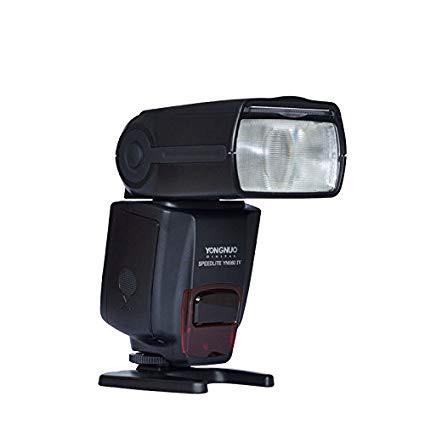
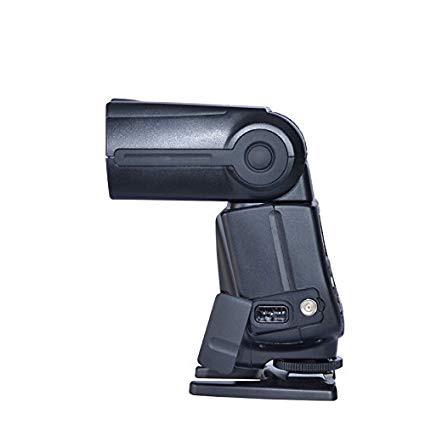
YONGNUO YN560 IV Wireless Flash Speedlite Master + Slave Flash + Built-in Trigger System for Canon Nikon Pentax Olympus Fujifilm Panasonic Digital Cameras
Write a review
$6800 $11800

YONGNUO YN560 IV Wireless Flash Speedlite Master + Slave Flash + Built-in Trigger System for Canon Nikon Pentax Olympus Fujifilm Panasonic Digital Cameras

Write a review
B00PGTOX26
+
Add to wish list
Adorama
Bronze
Serving customers for more than 35 years, Adorama has grown from its flagship NYC stor...

City: US, Pasadena

Delivery
Pickup at your own expense
Tomorrow from 09:00 to 20:00, Store location
Free
Payment options
Apple Pay Google Pay Mastercard Visa
Cash, bank card, credit/installment payments, cashless payment for legal entities
Warranty and returns
Exchange/return of products of proper quality within 14 days Official manufacturer's warranty: 12 months
Features
Item Dimensions
2.36 x 7.48 x 3.07 in
Description
This fits your .
Make sure this fits by entering your model number. YN560 IV=YN560III+YN560-TX, Supports Wireless Master Function. Supports Wireless Slave Function, fully supports YN560-TX, RF-603 II RF-602 Wireless Transmitter. Supports Multiple Trigger Synchronous Mode. Enure the battery is fully changed. Supports setting save automatically, custom settings ( fn ). Verify the Flash light setting Supports ultra-fast charging recycle system, External power supply. Check the remote control settings before use
Reviews
3.1
Reviews: 20
5 stars
40%
4 stars
15%
3 stars
0%
2 stars
0%
1 star
45%
Rolla Gravett
5
I guess you could say I am a Yongnuo big fan. I have 5 Yongnuo flashes (YN 560 I, a YN560 II, and two YN 560 IIIs, along with this YN 560 IV.) and the TX Transmitter unit. I have never had a problem with any of them and they are very powerful flashes. They are manual, but with digital cameras today, it is very easy to set your flash to the proper amount of power. Just set the flash at mid power and take a shot. Look at it in the LCD or EVF (Electronic View Finder) to see if the exposure is right. If it ts too bright, turn the power down. If it is too dark, turn the power up. That is all there is to it. If you then move in closer, turn the flash down and if further away turn it up one setting. The best part about the YN560 IV is it can act as a transmitter and a flash all at the same time. I have two YN 560 IIIs and set the YN 560 IV on the camera as the center flash, while at the same time use two YN 560 IIIs as side flashes. If you want the same settings for all the flashes, set all of them to one channel and group. In other words, if I want all of them to be at 1/64 power at a zoom level of 28mm, I set the YN 560 IV for that setting and press the Pilot button. You do have to initialize the YN 560 III flashes first. All the flashes will now be set the same way. If you want more or less power on the flashes on the side, for instance, then you need each flash in its own group. In other words, say Group A for the left flash and Group B for the center flash and Group C for the right flash. Now you can adjust them all individually Set them all on the same channel and they will all go off at the same time. If you have all three flashes set to Group A, and want more power from the center one on the camera (YN 560 IV), just adjust the setting on that camera flash without pressing the Pilot button. That flash will then have more or less power without affecting the left and right flash units. If you want all the flashes to have the same settings again, press the Pilot button on the YN 560 IV, and it will synchronize the flashes to the YN 560 IV. There are a bunch of videos on YouTube showing how to adjust or use the YN 560 IV flash. Just do a search on it. The YN 560 IV will only work electronically with the YN 560 III or YN 560 IV. If you have one of the earlier YN 560 I or YN 560 II flashes, you can opt for the RF 603 II to control those flashes electronically or set them to slave flash to control them with a camera flash or an external flash. You need one RF 602 II for each flash unit. The YN 560 IV will automatically set off a RF 603 II, but they are not controllable, and the flash will have to be adjusted manually.
ZEric
5
The YN560IV has worked well for me so far and is a great addition the the Yongnuo line up. In TX mode it fully controls power and zoom of the YN560iii and fires YN603s or YN605s. In RX mode it acts just like another YN560iii, and of course it can be used as a on camera flash or a simple optically triggered off camera flash. This is a manual flash with a single firing pin (no-TTL) and should work with any brand camera that has a standard hotshoe. The controls are slightly more complex than the yn560iii but its just like anything new with a minor learning curve. I find the YN560TX a little easier to use for changing settings on the remotes, but this product does make the 560TX unnecessary if you are on a tight budget. It fires fine in RX mode with the 560TX or 603 and has access to all 6 groups in both TX and RX modes. Range seems to be similar to others in this series (603, 560tx) and works fine in a mid sized reception hall (havent tried it in a large hall). It is compatible with the newer yn605 which has group control, but I have not tested this. Output is as good as most other speedlights out there, although I did not test it precisely using a light meter. When in any slave mode (RX, S1, S2) an LED on the front flashes, I find this bit annoying in dark venues and cover it with a piece of black tape which significantly attenuates the brightness. The battery compartment door seems pretty solid (this was an issue on some earlier Yongnuo speedlights). The 560iv has a port for an external battery pack that should fit Canon compatible packs. Like similar flashes, it has a pull out diffuser and bounce card. The PC port is a traditional threaded style. The head swivels (with detents, but no lock) to the right 90 degrees and to the left 180 degrees, it would be nice if it also swiveled to the right 180. Elevation is from about -5 degrees to 90. The shoe tightener is the screw down style Yongnuo has used for a long time, many people prefer the quick release flip type lock that Canon uses (doesnt matter too much to me). The flash does not have a USB port or obvious way to upgrade firmware. Size is similar to other full sized speedlights such as the 580ex-ii or SB900, and is exactly the same size as the YN560iii. The main display is back lit, but the buttons are not. It comes packaged with a small stand like most other flashes in this price range or higher, as well as a decent quality pouch, and some instructions that while not great, are understandable. This series (560iii, 560IV, 603, 605) is the best bang for the buck on the market right now (late 2014) for manual speedlights. The cost difference between the model iii and iv is minimal making the iii somewhat obsolete so if you are just putting together a new setup, I suggest going straight for the 560iv. Of the competition I considered, the Godox V850 has the advantage of battery life over this (and pretty much every other speedlight out there), but it requires an external RX dongle that falls off easily, doesnt have a built in transmitter, has poor remote range, and more a limited remote feature set than the 560TX or the 560IV in TX mode. For a minimal investment one can have a complete on camera/off camera manual system (sans modifiers) that works quite reliably. And if you want to incorporate some monolights into your setup, the YN605 is a great option which enables you to selectivity enable/disable certain groups from remote. I will try to answer any questions left in the comments. Like this review if it was helpful to you.
Kyle S.
5
I had one. Now I have 3. This is a full manual flash that has great build quality. Dont hesitate if youre looking for a full manual control flash. The built in optical slave works fine, but invest in the yongnuo brand transmitter (these have built in receivers) and you can control all the functions right from the top of your camera. Ive used them with a softbox and a silicone diffuser (magmod brand) to good effect.
oxome
5
My professor recommended this speed light, and its the best thing that has made my pictures look amazing. The price is right, quality is good. You can spin it a whole 360 degrees and it comes with a case for when you are not using it. If you are planning on buying a soft box or a light stand for the flash, then you should buy a YONGNUO YN560 YONGNUO YN560-TX for Canon Flash Transmitter Provide Remote Manual Power Control for YN-560 III Manual Flash Units Having Manual RF-602 RF-603 RF-603 II Compatible Radio Receivers Built In , its a Manual Flash controller, which triggers this flash to flash.I Also posted pictures of how one of YUNGNUO flash looks with a NEEWER 28x28 soft box Neewer 28" x 28"/70cm x 70cm Speedlite, Studio Flash, Speedlight and Umbrella Softbox with Carrying Bag for Portrait or Product Photography
Daniel Vincent
5
The flash will work with any of my Nikon, Sony or Panasonic cameras without issue. Its a single pin connection with no TTL functionality. So everything is manual but I dont find this to be a problem and Im okay with that. I got this after doing some research and hearing they might work with my Sony a6000. This review is for both the Yongnuo flash and 603N II triggers. This setup was a fraction of what it would cost to buy any of the name brand flash/triggers. When I first got it it was frustrating as it wasnt clear what I needed to do to get this setup to work on the Sony. First thing is to get the trigger and flash to communicate. They both need to be on the same channel, same group, in TX mode. Since I was already pairing it with the Yongnuo triggers this website http://www.davidpartington.com/m43/2015/01/03/yongnuo-yn560-iv-speedlite-review/ and this video review https://youtu.be/C-VukG3Cw9M gives a much better way to see how to set up the flash as the manual wasnt much help. Once the trigger and flash are communicating now you need to get the trigger on the camera. I read that the hot shoe on my Sony would need to have the black paint removed in order for it to work. This was false as the paint has nothing to do with it working or not. The pins on the triggers have to make a good contact with the hot shoe. What I found is that once you put the trigger on the camera the pins were not making a contact like they should. This is the key thing put some pressure down on the trigger pushing towards the hot shoe. Take a test photo while holding the trigger. It should fire and once it does lock down the trigger via the wheel lock. That is it...it just needed to have the pins make good contact before locking down. These also work for my Panasonic Lumix DMC-FZ1000. I highly recommend both the flash and triggers by Yongnuo. Very cheap alternative when comparing to big name brand components.
Tom R.
5
These 560 IVs are little work horses. I have a pair of them that combine with a YN-685 and trigger with the TX-560 controller. They all work together just fine. I usually use the 560s for the fill and hair lights on Portrait setups. I have had mine for over a year and they have held up well. I am not a professional photographer but I probably use them at least twice a month for a couple hours at a time without any problems. I use the 2700mah Powerex rechargeable batteries in the flashes and they cycle fast enough for me. They are not the most powerfull units available and are not HSS units but they get the job done. Side Note: The TX-560 trigger needs to have the Duracell batteries with the full 1.5v that they provide. The trigger will not work well with the rechargeable batteries as the voltage from them is a usually a little lower - 1.2v or 1.3v typically.
J. M. Schalow
5
There has been much said about the Yongnuo YN-560 series since it came out so I will not say much of its’ functionality as the IV model has the features of previous models and then some. The “and then some” features are what makes the IV a pleasure to use. I have owned two Yongnuo YN-468 II (TTL for Nikon) for some years and found them to be very reliable both on camera and off using Yongnuo RF-603II triggers. The YN-468 II is a smaller speedlight (the size of Nikon’s SB-600) with a guide number of 38. I wanted more power so I picked up the YN-560 IV that has a guide number of 58. The 560 IV can be used as a master and allows you to set groups. As an RF slave it works perfectly with my RF-603II triggers and the optical slave function works good as well. It is stated that the Yongnuo YN560-TX will allow you to adjust the power of the 560 IV remotely. I do not own one of those units. I tested the RF of the 560 IV and could trigger the flash form a block away with no obstacles. I could also easily fire the flash in every room of our home. As no external trigger is required, the 560 IV sits better on a light stand using modifiers such as umbrellas or a softbox. The build quality of this unit appears to be quite good and a battery pack can be used if desired. This flash just plain works every time. It is a fraction of the name brand flash (no TTL of course) making it a no-brainer for off camera use. Highly recommended.
Micheal Mathews
5
I realize there are already almost 400 reviews for these flash units and mine will most likely get lost in the flood but I just wanted to weigh in on what makes them so awesome. First of all I have used Canon Speedlights in the past, still own a 430EX that sits in a box and collects dust. I really dont like using ETTL as I find it rarely gives me the kind of exposure I like in my photos. I personally feel it looks flat and unprofessional so this review will be based on manual functions. This unit doesnt have a TTL function anyway so... on to the review. I have been using Yongnuo flashes for about 3 years now and I honestly have no gripes. None at all. Especially now that Ive upgraded to the IV models and get the added wireless functionality built in. I dropped a 560III model about 4 feet onto the concrete a couple years back and the bottom of it broke off. It actually kept working for a full 2 hour shoot after that before it blew out completely. Probably due to some shorts after wires coming loose. But that just speaks to the durability of the Flash. Heres the thing, at this price, I was not upset. I dropped a Speedlight onto the concrete, watched a chunk of it fly off and thought, "Darn... well I guess I need to buy another." Try having that mentality with a Canon or Nikkon Speedlight. I take these hiking, out on major event shoots where Im running around bumping into stuff, sometimes outside and getting rained on etc. etc. I never worry about breaking one because I know I can afford to grab another. Its a freeing feeling. I worry enough about my camera and my lenses as it is. Heres the other reason I love these. While I have a master controller for my speed lights, I prefer to use my flash in manual mode even when its attached to my camera or on a trigger. On the Canon speed lights switching power while in manual mode takes a few extra clicks and requires you to depress the tiny center button first to let the unit know you want to start changing power level. It drives me a bit crazy now that Im used to these. With the Yongnuo in manual mode, you just click one side or the other on the interface and your power level changes by standard stops. Click up or down to change power in smaller increments. I can get the exposure I want so quickly with these now that I really dont understand why Canon chose to design theirs differently. The wireless works well with the YN560-TX master controller though my shutter speed needs to drop to about 160 to avoid shutter shadow. They work flawlessly with the RF-603CII-C1 triggers. The power is also definitely up to par. Just one of these is enough to light up a medium-sized room with some bounced light. I have 3 (still less $$ than 1 canon) and dial them in at different levels for a better effect but have gotten by with 2 in very large rooms and been happy with my results. Ive used them on both a t2i, t3i and a 6D and have friends who use them with 5D MarkIIIs and love them just as much. If I had to pick one thing I dont like... I guess that they heat up and delay quickly. If you are firing off shot after shot the batteries get hot quick and the unit will force a delay until they cool down. You can attach an external power pack to eliminate the problem but I have learned to just work around it. Im a bit more intentional with my shots anyway so Im not one to just blast away, spray and pray style. Id say I can get about 8 minutes of continuous shooting, full power, at maybe a shot per second before I start experiencing delays. You should also consider the speed, if you need to shoot at High Speeds like 250+ then these will not work. If youre using a controller you may even need to drop down to 160. Beyond that, no issues. Again, if you like automatic exposure and using the TTL or ETTL functions then this is obviously not for you since it doesnt offer that functionality at all. But if you use manual adjustments with your speed lights or you use a master controller then these are not only up to the job but they are incredibly affordable meaning you can have multiple flash units on standby if one gets broken. Really cant recommend them enough. Ive bought 5 so far, broke one 560III and gave the other away once I got my IVs. I plan to buy a few more as backup and can happily say that I feel confident in my purchase.
You may be interested
  • Bestsellers
  • Recently Viewed
 
Fast and high quality delivery

Our company makes delivery all over the country

Quality assurance and service

We offer only those goods, in which quality we are sure

Returns within 30 days

You have 30 days to test your purchase