









R. Buchmann
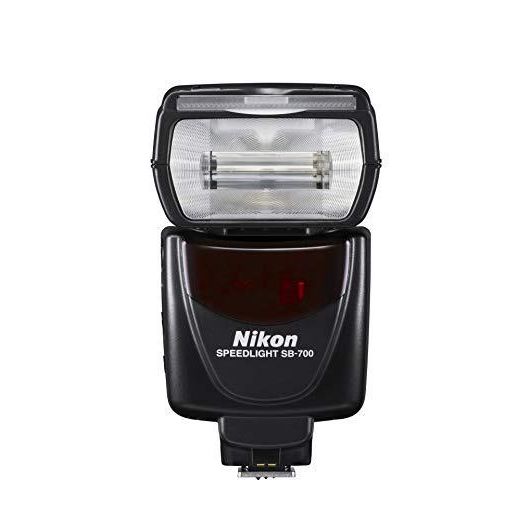
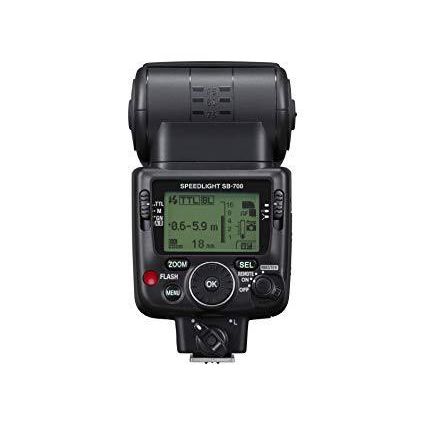
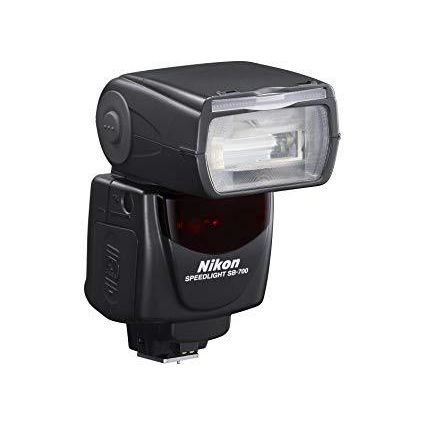
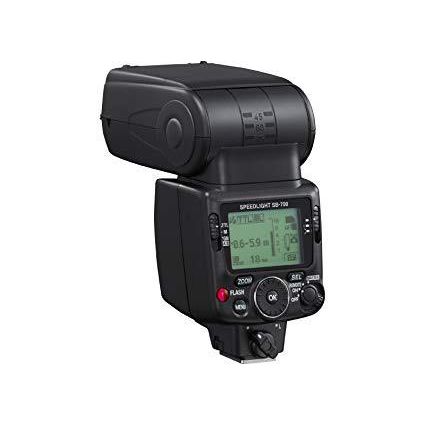
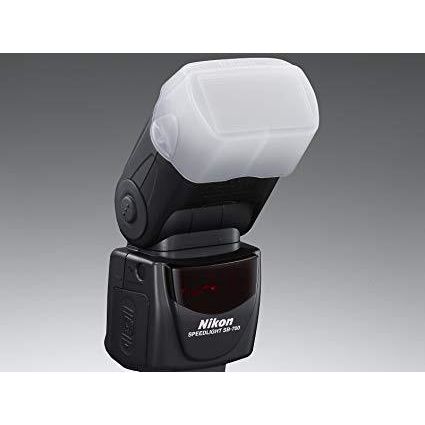
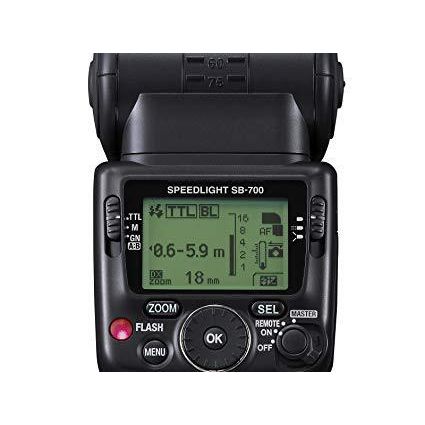
Most importantly, I am not a professional photographer. I would say I am a very enthusiastic hobbyist when it comes to photography. That being said, I always do my research when it comes to photo gear. For the purpose of this review, I use the Nikon D5100 which is a "cropped" (DX) sensor. That is somewhat relevant when looking into gear and flashes. Overall, this is a great flash/speedlight upgrade to the built-in flash on your dSLR. There are cheaper and simpler options available, but if you want to buy a high quality product that has features that will let you expand your photography skills, this is a great option. Important general things you should be aware of when consider any flash/speedlight upgade: (Final "Pros/Cons" at the bottom) • Upgrading to an good mounted flash/speedlight will dramatically expand your options when using a flash as well as the overall quality of the photos taken with a flash. Keep in mind, a good mounted flash/speedlight like this can be used indoors AND outdoors to provide fill-light which is helpful when your subject is backlit or you are take shots in low-light. • One of the primary benefits/goals for upgrading to a mounted flash/speedlight is to obtain better fill-light and softer, more even lighting to reduce or soften shadows. In order to make sure you have the most options, you will want a flash that can rotate up/down as well as left/right. This will allow you to "bounce" the flash off of a ceiling, wall or other reflective surface. This is one of the keys to getting softer shadows and it is super-simple to take advantage of. The SB-700 is 100% capable of doing this, but be aware that some other Nikon or third-party flashes do not rotate or only rotate up/down. If you plan to shoot in portrait mode (vertical orientation) you will need to be able to rotate the flash left/right in order to point at the ceiling. • There are MANUAL flashes and "Automatic" TTL compatible flashes. The main difference is that MANUAL flashes require that you adjust the flash power/compensation yourself for each shot as the exposure changes and you zoom in/out. There is no "auto" mode like your built-in flash. Flashes that are more "automatic" are TTL compatible which means that use information from your camera (TTL = Through The Lens) to automatically calculate the amount of flash needed for a given shot based on other camera settings that determine the exposure needed. That being said, most experienced photographer comments/reviews I have scene will tell you that MANUAL is the way to go to learn and is perfectly suitable. However, I am sure many of you (like myself) are looking for something that is automatic most of the time, but gives you the option of manual adjustments, (This SB-700 offers both). Many of the cheaper (but not necessarily worse) flashes do not offer TTL or "Automatic" flash adjustment. • Manufacturers like Canon, Nikon etc have their own proprietary "lighting systems". Think of these lighting systems as a set of rules/standards by which their cameras communicate with "compatible" flashes to properly light a scene with one or more flashes. IMPORTANT: Not all flashes are compatible with these proprietary lighting systems. Nikons system is referred to as "CLS" compatible which stands for "Creative Lighting System". This SB-700 is fully compatible with that system, but your camera may not all Nikon cameras have 100% of the hardware capabilities to take advantage of all of the CLS features. More on that later. Many third-party flashes do not offer compatibility with some of these proprietary systems. Some do, but I have read that there can be some compatible issues so be sure to do your research if you go the route of third-party flashes. • Not all flashes/speedlights (and cameras) are capable of using high shutter speeds (above 1/200 of second or so). In my research, this seems to be an issue with the mid-range dSLRs (Like the D5100 and others) due to the fact that they use a mechanical shutter as opposed to an electrical one. It all has to do with how quickly the shutter can open/close and react to the timing of the flash. I believe this is referred to as flash sync of xSync. What does this mean? Well, if you want/need to use a flash and are hoping to "freeze" fast motion (faster than average at least), some cameras will not be capable of utilizing faster shutter speeds above 1/200 of a second. The special flash/shutter mode that allows this is referred to as "Auto FP" or "HSS" depending on your camera, etc. Is this an issue for you? I was kind of bummed about this and found out about it AFTER I purchased the SB-700. That being said, it really isnt a huge deal. The drawback to using Auto FP/HSS (if you have it) is that is dramatically decreases the power/light of the flash to about 25%. So you arent going to get a ton of light anyway with those higher shutter speeds. Plus, at that point, the speedlight is acting more like a constant light than a true speedlight (to FREEZE motion). Would Auto FP/HSS be helpful in capturing faster than average motion? Probably. Should the lack of Auto FP/HSS on your camera prevent you from buying a flash? Probably not. So, the SB-700 is capable of AutoFP/HSS, but you camera (including the D5100) may not be. • Master/Slave/Commander Stuff. You will definitely see info about master, slave, commander when researching flashes. This basically comes down to using one or more flashes off-camera (usually wirelessly) to achieve different lighting affects. From my "hobbyist" research, it basically involves a "Master" flash unit "Commanding" one or more "Slave" flashes. In order for a "Master" flash to control a "Slave" flash, the "Master" flash OR camera must have a "Commander" feature/capability. The good news is that the SB-700 is capable of being used as a master or slave flash, BUT the SB-700 does not (I believe) have "commander" functionality built-in (The SB-900 does). If you have a higher-end dSLR, you camera probably has "Commander" functionality built-in so you are good to go. Sadly, the D5100 does not have this functionality. What does this mean? If you want to use the SB-700 off-camera (but by itself) with a camera WITHOUT "commander" functionality, you will either need to use a hot-shoe cable from your camera to the SB-700 OR you will need to purchase an additional "Commander" unit (or the previously mentioned SB-900 mentioned) that attaches to your hot shoe and "adds" commander capabilities to your camera. The good news is that once you have "commander" functionality you can wirelessly control one or more slaves. Bottom line...if you are not concerned about using the SB-700 off-camera or with other flashes you dont need to worry about this, BUT options are available if you decide to expand you lighting. • Full-Frame vs Cropped Sensors (FX vs DX) and Flash Zoom modes. I wont get into everything about sensors (because I dont know everything about them), but I will say that not all flashes are fully compatible with both FX and DX format cameras/sensors. I THINK this ultimately means that the actually power and exposure of the flash will not be fully utilized by your camera if you have a DX camera (Like the D5100) and use a FX only flash. So if you buy a cheaper "high-power" flash, your DX camera may not get to use all of the advertised flash power. A lot of the time you will see stuff about GN or "Guide Number" this (I believe) has a lot to do with the flash power at different focal lengths and subject distances. The good news is that the SB-700 DOES support both FX and DX formats so you are somewhat future-proofed. WOW. Ok, so If you made it this far, I am sure you are serious about a new flash. Hopefully I help you and saved you some time. Below is my "summary" of "pros/cons: Pros: Very versatile flash/speedlight upgrade Can be used in "Automatic" mode OR Manual mode. Fully compatible with Nikon CLS system Supports both FX and DX cameras/sensors Can rotate vertically and horizontally (ideal for bouncing in landscape AND portrait orientation) Includes built-in diffuser and bounce panel Also includes mountable diffuser dome for direct flash use Supports automatic TTL and Manual modes LCD Display is clear, backlit and easy to use Offers master/slave capabilities for expanded lighting setups. No built-in commander though. Most professional features for a more reasonable cost Well-built and sturdy Nice, laser-like pre-flash for proper focusing and exposure From other reviews I have ready, it has a very fast "recycle" time which means you can take multiple shots with flash in quick succession. It seems to work well for me, but I have not calculated this myself. Cons: Pricey for non-professionals - although worth the price. Have to be careful to depress side button when rotating. A little stiff Definitely adds some size and weight to your setup. There are smaller/lighter options available. You can get MANY of these features from third-party flashes/speedlights for LESS money, BUT you sacrifice full CLS/iTTL compatibility and probably are not getting the same level of product. The other feature usually missing from third-party flashes is either an "Automatic" mode and/or full support for FX & DX sensors. For mid-range dSLRs (Including d5100), you cant utilize Auto FP or HSS for higher than 1/200 of a second shutter with the flash. Cameras without "Commander" functionality cant use the SB-700 as a master without the use of a hot-shoe cable OR a separate "Commander" unit. There is not ability to "trigger" the SB-700 via the built-in flash of the D5100 and many others. If you found my review helpful, please indicate so below or share a comment. Thanks.