


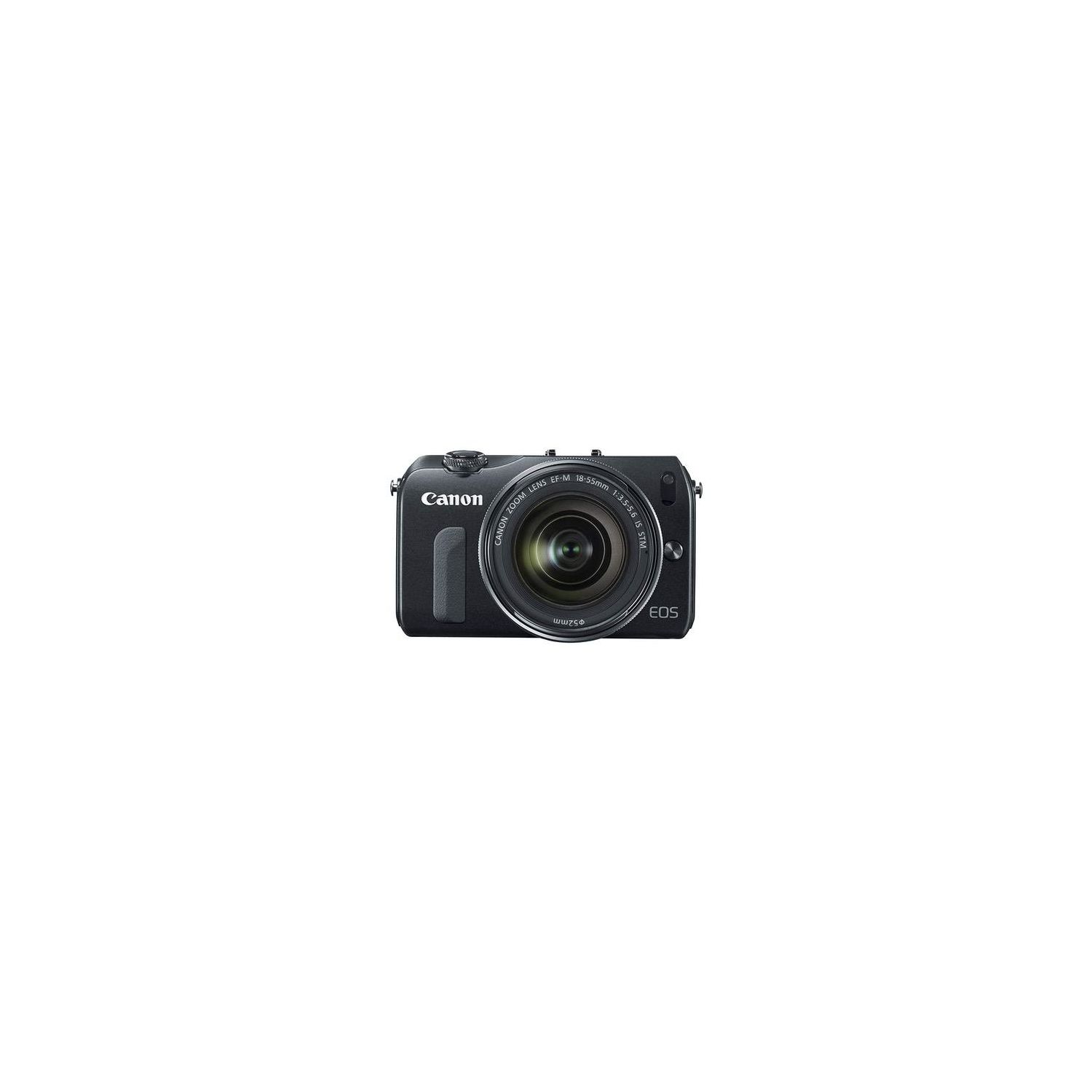
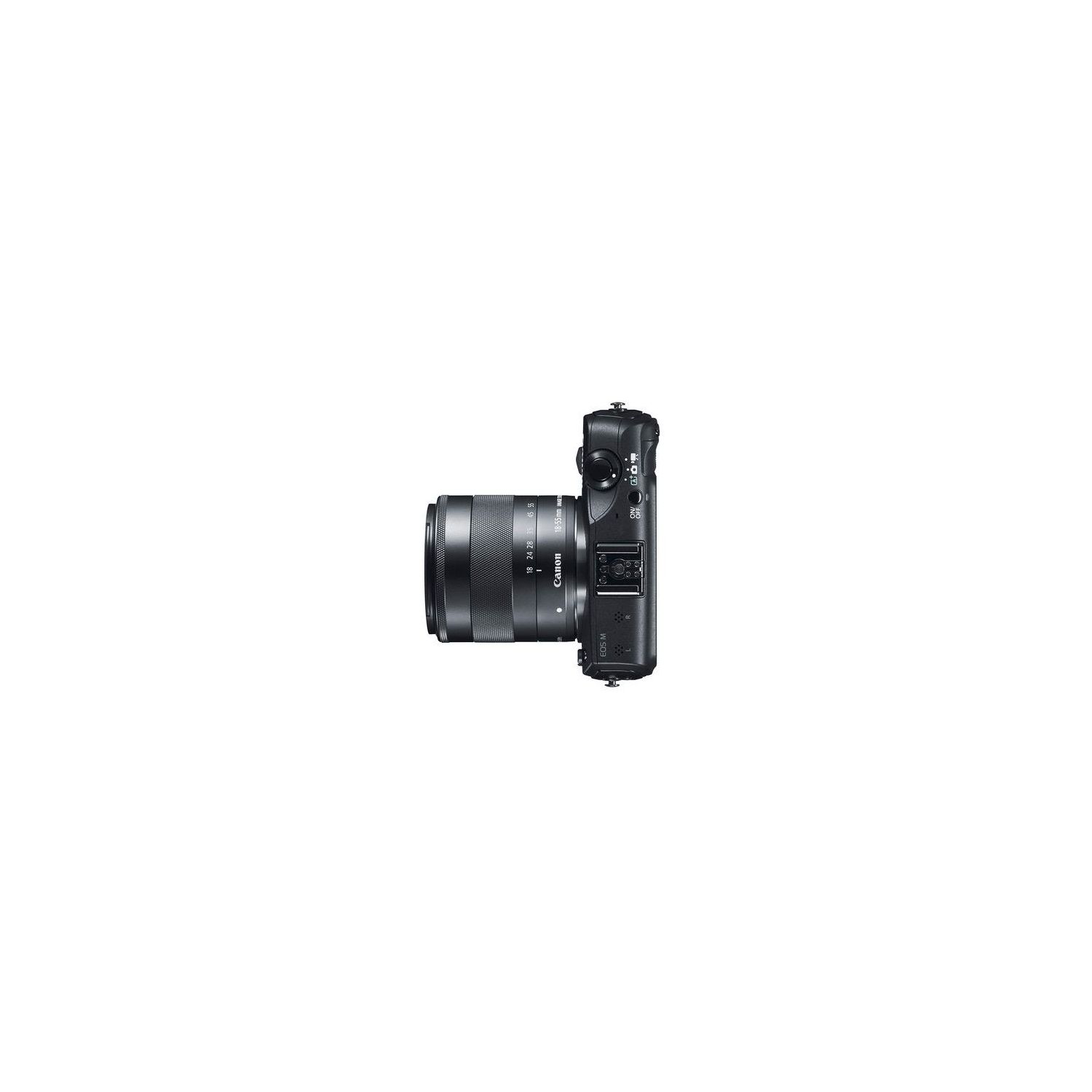
Canon EOS M 18.0 MP Compact Systems Camera with 3.0-Inch LCD and EF-M 22mm STM Lens (OLD MODEL)
Write a review
$69900

Canon EOS M 18.0 MP Compact Systems Camera with 3.0-Inch LCD and EF-M 22mm STM Lens (OLD MODEL)

Write a review
B008NENG1A
+
Add to wish list
Adorama
Bronze
Serving customers for more than 35 years, Adorama has grown from its flagship NYC stor...

City: US, Pasadena

Delivery
Pickup at your own expense
Tomorrow from 09:00 to 20:00, Store location
Free
Payment options
Apple Pay Google Pay Mastercard Visa
Cash, bank card, credit/installment payments, cashless payment for legal entities
Warranty and returns
Exchange/return of products of proper quality within 14 days Official manufacturer's warranty: 12 months
Description
This fits your .
Make sure this fits by entering your model number. 18.0 Megapixel CMOS (APS-C) sensor, DIGIC 5 Image Processor, ISO 100–12800; expandable to 25600 (H) Hybrid CMOS AF and Multi Shot Noise Reduction EOS Full HD Movie mode with Movie Servo AF for continuous focus tracking of moving subjects Compatible with Canon EF and EF-S lenses (Optional EF Lens Adapter is required) Compatibility with SD/SDHC/SDXC memory cards, including new Ultra High Speed (UHS-I) cards
Reviews
4.4
Reviews: 20
5 stars
45%
4 stars
45%
3 stars
10%
2 stars
0%
1 star
0%
Mike
4
I am writing this review from the perspective of an enthusiast who was looking to upgrade from point-and-shoot cameras (Canon G-Series for serious shots and a Canon ELPH for pocketable convenience) to something with a larger sensor and better lenses. I started my research pretty convinced about upgrading to a DSLR (preferably a 60D); however, I ultimately decided on the EOS M for a couple reasons: 1) The majority of my photos are taken while hiking/backpacking. I just couldnt reconcile the fact that I would have to lug around such a heavy and large camera in my backpack just so I could take better quality photos. 2) All the negativity around the EOS M not physically performing on par with DSLRs seemed to really knock down its price to the point where it is now (August 2013) a steal at almost $300 less than the Canon EOS Rebel T3i (with 18-55mm lens) and around $500 less than the 60D. With that said, you now know the perspective from which I am approaching this review, so here are my opinion of its positives and negatives after about 200 test shots in various conditions: POSITIVES + ----------------- 1) Image quality is far superior to my existing point-and-shoots. Thats enough to make me happy. 2) The lens and body feel solid and are constructed of mostly metal. The kit lenses with the Rebels feel much more cheaply constructed (plasticy) than the EF-M 18-55mm included with the EOS M. 3) The touchscreen is nice. Using the touchscreen seems quicker than navigating the menus using the buttons/dial--probably because youre able to jump to things without having to press directional buttons/dial until you arrive at an item to select. 4) EXCELLENT IMAGE QUALITY--its worth repeating this one because its all that really matters. ============================================== NEGATIVES - ------------------ 1) The battery life is very bad. I couldnt believe how quickly I was able to drain the battery. Of course, the battery drained quicker than usual this time because I have spent so much time navigating through the menus and testing things, but it still was very disappointing despite going into this purchase knowing that short battery life was an issue. 2) I feel that the camera is awkward to hold when affixed with the 18-55mm lens. (I have not tried the 22mm lens.) I feel like I could drop it very easily unless I have my left hand underneath the lens to support the weight. It feels a bit front-heavy. And with so much touchscreen interaction necessary, sometimes theres no choice but to use that left hand for some of it. 3) The lack of physical buttons is a bit annoying. Things are easy enough to handle through the LCD screen, but I like to be able to change some settings very quickly--sometimes without even having to look back at the LCD screen. Physical buttons are really the only way to be able to accomplish that with an acceptable degree of success. I prefer to have options such as the main shooting modes (P, Tv, Av, etc.) and metering method (spot, center-weighted, evaluative, etc.) accessible by physical buttons/dials. 4) The different-style strap connection seems like a good idea, except the tiny piece that locks the strap to the camera is made of plastic! Im sure itll work fine, but it does not inspire confidence. I find myself keeping one hand on the camera at all times, just in case. ====================================== A few other comments... *The autofocus speed and accuracy is fine from my perspective. Its at least as fast as the point-and-shoot cameras I am upgrading from. (My EOS M did come installed with the 2.0.2 firmware.) *I would have loved the experience of using a proper pentaprism optical viewfinder like the one on the Canon EOS 60D, but Ive spent the last decade or so using LCD screens exclusively, so Im not put-off by the lack of a viewfinder. *I love Canons articulating LCD screens. The fact that this camera did not have one was almost a deal-breaker for me. I like to take a lot of shots from a lower-than-eye-level perspective. I guess Ill have to actually kneel down now. Boo. *It would have been to nice to have even a terrible built-in flash. I dont use a flash often because I normally shoot landscapes, but every now and then Im photographing a nice sunset with maybe some flowers or other foliage in the foreground that could use a splash of light to make the shot special. Maybe Ill see if I can pick up a used flash to attach someday. *Why doesnt Canon put intervalometer software on their cameras for use in time-lapse photography? It seems like such a simple application to include (and, in fact, can be added to some non-EOS Canons via freely available hack software) In summary, there are certainly some annoying quirks related to the functionality of this camera, but the important things are the lens and the sensor, and, therefore, the image quality. Its a small, lightweight (and, now, relatively inexpensive) way to significantly bump up your image quality without having to lug around a camera that, quite frankly, wouldnt even really fit inside my day-hike backpack. I think the Canon EOS M is a (nearly) perfect option for the enthusiast looking to upgrade from a small sensor point-and-shoot who values compactness over DSLR-level physical performance .
Mike R
4
Ive been using DSLRs for almost 8 years now and have avoided the EOS M for the longest time -- I prefer the large size of a heavy DSLR with battery grip, so the benefits of a "small camera" never did much for me.. especially if making compromises. I have 3 DSLRs (xD and xxD and xxxD series canon) and honestly bought this because it was cheap (I typically use multiple bodies to be able to have multiple lenses ready at all times, opposed to changing). With some of my older bodies showing age (10 megapixel, older sensor) the price of about 300 bucks for the EOS M, the 22mm f2 and the EF adapter (with a couple spare batteries) was about half of what a new Canon Rebel would have cost. I didnt buy this to replace a camera, or as a first camera, but to compliment my existing ones. The EOSM is VERY small and light.. this works both for and against you. The small size will make it easier to shoot in public without the visibility of holding a large pro camera (it looks closer to a point & shoot than a DSLR, with the 22mm f2 lens).. but if doing a photoshoot with it, people will take you less seriously (it looks like youre doing a professional shoot with a point & shoot).. Doesnt affect the quality whatsoever, but it is something to keep in mind. The camera itself is nice -- most of the functions are done on the touchscreen (such as focus points) which are nicer than some of the DSLRs and using the dial to select a focus point), but changing the ISO, Aperture, Shutter, etc.. are also via touchscreen. It would have been nice to have taken the actual controls for the Canon G-Series point & shoots instead of going all touch. On the same note, they seem to have taken the Rebels minimized ISO settings (100, 200, 400, 800, etc...) opposed to the 100, 125, 160, 200, 250, 320, 400, etc.. of the higher end models. No wifi or GPS built in (I believe they added them in the M2).. these would be nice, but not necessary. A tilting screen would have been much nicer (since there is no viewfinder) Camera uses a SD slot, shoots RAW or JPEG. It has a weird (and somewhat questionable) camera strap.. nice that it comes off/attached easily but kind of scary with how easy it can be removed. Ill be using an R-Strap with it. No handstrap option or battery grip options available. The camera has a normal 1/4" 20 tripod threading on the bottom (lined with the center of lens). If you buy the EF Adapter, it also included a tripod threading on the collar (great for heavier lenses). The hotshoe on top is a real, standard hot shoe and works fine with hotshoe accessories, flashes and wireless transmitters. Photo quality is VERY nice.. same as from a nice DSLR (use good glass/lenses with it!). Autofocus is a bit slow, but really it works fine for me.. the thing to keep in mind is if youre having someone pose for a photo, youre fine. Modeling, its fine. Group shots, fine. Landscapes, fine. Only problem is if youre shooting sports.. I wouldnt use this for any fast movements as it probably wont focus quick enough. I highly recommend the 22mm f2 lens (even if you have good EF lenses -- the 22mm is a really nice lens) and recommend the EF adapter (theyre now under 50 bucks for a canon-branded one). The EF adapter lets you use canon EF and EFS lenses, including aperture/autofocus and image stabilizer. Overall, Im really enjoying it and considering buying a 2nd one to carry with a different lens. The price (late 2014) is great.. at its full price I would have passed. With it having not taken off, and the M2 only releasing in Japan, chances of an M3 are very low. EDIT: Just about a week after buying this, I picked up a 2nd one. For the price, it cant be beat and I wanted to grab a 2nd (for when I dont want to bring multiple DSLRs along) before theyre gone entirely.
Photographer Advocate
4
I purchased this camera because I have a Canon 5dMKIII and lots of lenses that I didnt necessarily want to carry with me when traveling for pleasure. Although it isnt a pocket camera, it is darn small with the 22mm pancake lens. This camera is quality, solid feeling and once you get used to the complexity of navigating the beautiful touch display on the back to control all your manual features you will wind up with beautiful movies and stills. I bought the $70 adapter on ebay to attach my other Canon lenses, and that was fun to play with. Pros: low light movies...really good! With the 22mm you can pretty much get what you need, you just have to move in to your subject if you want to fill the screen. Macros are really good too (am a huge macro fan) although not as good as the G9-12 series. I had not tried the 18-55 zoom, but I would definitely get that. Cons: it is a bit slow to focus on video, but I can live with that. Stills focused just fine with the new firmware update, no complaints there. Batteries drain pretty quickly with the big beautiful display so buy extras and an extra charger. When the price dropped another $80 three weeks after I bought it, Amazon would not give me the discount and said Id need to return this one (under the return period) and buy a new one at the reduced price. So, I returned it and because I found myself amassing a kit that was almost as unwieldy as my DSLR (because Id need an additional 18-55mm lens, the adapter, the lens hoods, extra batteries, strap, maybe a grip) I decided to not buy another EOS-M. I may regret my decision. You can do beautiful images with this camera. If you cant take fantastic snapshots with this camera, you just cant take a picture!
Andrew Kim
4
A great starter camera for those who are looking to get into photography but cant afford expensive full frame bodies. Ive been able to get quality shots that rival those of higher end set ups. I recently got into photography and with a decent lens Ive been able to capture some great photos. Of course not being a full frame means there is a 1.6 crop factor that is sometimes frustrating and sometimes a god send. The only negative Ive frequented about this camera is its annoyingly slow autofocus. In quick snap and go situations I had to learn to adjust lightning fast in manual mode or else I would lose a shot. Other than that, its compact body and versatility has helped me land a lot of great photo opportunities. This is my first camera body and although I have played around with others, I am satisfied with the EOS M until I have the funds to invest into a better set up.
psat
4
This is an awesome pocketable camera that is small and lightweight that I am willing to carry with me anywhere. I already have the trusty Canon 5D Mark II and used to have the Canon Powershot S100 for pocketable camera that was stolen from my car and was going to replace it until I saw the deal on this camera. I did not consider this camera before due to the price and the negative reviews it received regarding the autofocus speed that was slow. But when the price went down to LESS than GoPro3 black edition (of which I also have) and to within the price range of the awesome but stolen Powershot S100, then it made me consider getting this camera and boy am I glad I got it! Main purpose of a good camera is taking great pictures, right?. EOS M does a marvelous job at a level you expect from a prosumer DSLR. This compact camera has the LARGEST chip of any affordable compacts with APS-C sized chip. Sony Rx1RB has full size chip but it costs several thousands of dollars. Why the size of chip matter? Larger chip gets you better picture. That is why DSLR takes better pictures than smartphones. Several reviewers in photographic magazines complained of lack of buttons and instead EOS M relies on touchscreen menu to get where you want to. My experience is that it is easier to navigate the options with the M than the Powershot S100 in which there were quite a few buttons and knobs but still complicated to get where you want to go to, if you remember where to find it. Autofocus: There has been much criticism on the slowness of the focusing capability of this camera. Mine came in with the latest update and the focusing was slower than my Canon 5D mark II. So I had to adapt to it and be aware of that when taking pictures. I just know I will not get the sports pictures. For that, I can use the 5D mark II which by the way it is not that fast compared to the newest version, the III. Right now there is no USB remote control capability with EOS M using the Android Apps like DSLR controller. Apparently it is crippled by Canon. Magic Lantern is working on a solution and right now is it in Alpha stage. So it looks like that in the future it could be done! Canon can change its mind and make it so that it is USB control capable like the 5D mark II or III or the newer Rebels and other EOS. There has been discussion online with defects on certain EOS M that right side of pictures are washed out. I checked mine and it was fine. Something you need to check if you get one. Would I recommend this camera? That depends on what kind of pictures you take and what is your expectation. It is possible it may be too slow for family/kids pictures and many point and shoot cameras could be better and more inexpensive than this unit. But if you are into the art and love of photography for arts sake, this camera can bring you to that level in a compact form. Addendum: As to which lens you should choose,I chose 22 mm lens because of its physical size it made it more compact. Since I already had other Canon lenses for my 5D mark II and with the optional EOS M EF adapter, I can attach any telephoto lenses. If you are planning it to be your main camera and you do not have other lenses, the 18-55 may be a good choice but you lose the compact factor and note the autofocus speed may not be adequate if you have children to take pictures unless they learn to be still. Since my smartphone Nokia N8 only had one focal point, I learned to crop a lot. So with the 22 mm lens, I know I can crop my pictures since I take them in raw format, so it would not lose information to get great pictures. Addendum 2 from Nov 2013. I got the refurbished Canon lens EFS 18-135 mm with STM (step motor) and I was pleasantly surprised how fast the EOS M was able to focus compared to the 22 mm lens. The EFS lens required adapter of course of which I already purchased so I could use other Canon lens.
JBrady
4
If you know the limitations of this camera and are okay with them, then its FANTASTIC. Unless you have a very high skill level with manual focusing or pre-focusing, this is NOT an action camera. However, its GREAT for everything else. I actually owned the M and then sold it and just bought another because Ive decided to use the camera where it excels (still or minimal motion photography) rather than trying to force it to be something its not. The image quality is great and the compatibility with my other Canon lenses (via the EF to EF-M adapter) is awesome! The shot to shot time is slow (it helps if you turn image review off), the ability to track a moving subject isnt very good, and the screen is hard to see in bright light (you can assign the "trash" button to brighten the screen if you look into the custom menus which makes it much better). Other than that, its hard to complain about this camera!
Mark Jones
4
This is quite an impressive camera. In conjunction with the 22mm STM lens, indoor photography is a cinch. In relatively low light, Im able to shoot at 1/40 f/2.0 ISO1600 and not have to do much in terms of image correction. To not hesitate shooting in ISO1600 is a blessing as the noise produced doesnt become discernible except at full resolution. While the 18-55MM may provide more versatility, you lose a lot of your indoor shooting capabilities not being able to open the aperture more. I also want to commend the screen included with the camera. On my old Pentax K-x, the 320k screen made it hard to make out fine details unless you transferred the photo files to a computer to preview. With the EOS M, it is quite easy to see how well a photo came out just looking on the screen. The only area I have an issue with is the AF. Even with the firmware update, its somewhat sluggish, though it doesnt roam the entire focusing gamut. Unless continuous AF is shut off and Single-Point Flex is selected, expect lengthy focusing times. The absence of a built in flash is noticeable, but it doesnt bother me much since they generally wash out all the details. It is compatible with external flashes (such as the EX90) so if you feel the need to add one you can. That all being said, the image quality is REALLY impressive. The JPEG processing is solid, the RAW photos surpass my K-x easily, and every f-stop seems to be extremely sharp (i.e. theres no specific sweet spot, it looks good no matter how open or closed the aperture is). At the original price, Id be hesitant to purchase this. But at $300 w/ a lens that is great for indoors and produces crisp images, its an easy recommendation.
PhotoBug
4
I like this little camera a lot. Image quality and resolution are top notch, colors are natural and the cameras compact build is very handy. I would give EOS M a sound five-star rating except for some things that hamper my shooting style, and some are points I wish Id read about in online reviews - but didnt see anything about. I wont harp on the slow autofocus. Or any of the other issues that have been ground to death. With the firmware update, autofocus is - for the most part - snappy enough for my needs. The cameras a little slower to focus with the 22mm pancake lens than it is with the 18-55 (I have both), but overall its performance is quite satisfactory. I dont use movie mode frequently, but when I do, it makes wonderfully smooth videos with nice stereo sound. For my personal shooting style, things that could stand improving: 1. In the creative modes (Program, Aperture Value, Time Value and Manual), manual ISO settings are restricted to 100, 200, 400, 800, 1600, 3200 and so on. Theres not a way to set the sensitivity between these stops. In many instances a sensitivity between 800 and 1600 would be plenty sufficient, as well as between 1600 and 3200. But youre forced to the next full stop on the menu, and unnecessary noise is introduced into the image. It would be so helpful to be able to stop at 640 or 1000, for instance, ISO settings I frequently use on my EOS 60D. Put into Auto ISO mode, the camera will sometimes select a sensitivity that works to best advantage, noise-wise, and sometimes it doesnt, but its always worth the try because the camera itself CAN select an ISO setting between the manual ones, and sometimes it is a better alternative than the user defined settings. The down side here is that in Auto ISO mode, the highest sensitivity is restricted to 6400. Its really not that much of a down side, though, because beyond 6400 noise is too unacceptable, in my view, to be used except in extreme situations, anyway. 2. No Vari-Angle LCD. If youve never used one, then you wont miss it. But over the years I have chosen Canon cameras over other brands for this really indispensable feature. Of course Canon build and image quality also matter, but that flip-and-twist LCD is the final selling point for me. This feature takes shooting to a whole new level of outright fun and adds a dimension of creativity to shooting that cannot be achieved otherwise. Not only does the articulated LCD provide a superior way to shoot low-level, waist-level and over-the head shots, but I find it also adds a measure of stability when shooting two handed at slower shutter speeds. So a solid star off for this missing feature. 3. No built-in flash. While I do prefer existing light photography to flash photography, sometimes a built-in flash is plain handy. How hard would it have been to include one? Taking along an external flash really sort of defeats the point of carrying a compact camera. 4. No viewfinder. This isnt much of an issue unless Im shooting with the lens adapter and an EF or EF-S lens. The balance of the camera is thrown off some, and its heavy with a standard sized lens attached. The stabilizing effect of pressing the camera against my brow would be of significant benefit here. Its almost the same as holding an SLR out in front of you and trying to get a clear, well-framed shot. Doable, but not an easy thing. Also in bright light, the LCD is a tad hard to see, and a viewfinder would be welcome! 5. Focus point is too large for some shooting. Theres no way to adjust the size of the focus point for fine details. This becomes an issue when shooting macro or scenes with details like the lettering on signs, or grass blades, or tree leaves, or cactus spines. You know, details. (You CAN magnify the area where you wish to focus and pinpoint a smaller area, but it takes extra time and still does not always focus where you want.) 6. It would be nice to have a setting for off-camera, wireless flash. Dont get me wrong, though. I am truly enjoying the camera. Image quality is really very good, especially when shooting RAW and post-processing images with Digital Photo Professional (the supplied software), Lightroom or Photoshop. For me image quality is the bottom line. Id rather use a quirky camera that takes great pictures than a blazing fast hip-shot model that takes ho-hum ones. Speaking of Lightroom, youll need a version later than Lightroom 3. That program does not support EOS M raw files (or G1 X either). Youll need a later version. Im using LR 5. This camera body IS compact, actually a bit smaller than my S90. With the 22mm lens attached, its really a small package, smaller than the G1 X with its built-in lens. For the most part, I am very pleased with the EOS M. Its a handy little addition to my kit and goes with me pretty much everywhere. Dynamic range, resolution and color are all very pleasing, and the few quibbles I have with it are just that. Quibbles. I am very interested to see what changes Canon has made with the EOS M2, the as-yet unannounced successor that is showing up on the list of supported cameras in their latest editing software version. If the new model has a Vari-Angle LCD, as much as I like the EOS M, it will promptly go on the auction block. Heres hoping for an EOS M with a Vari-Angle LCD!
Jered Mckenna
4
Why 4 stars and not 5? Well, let me tell you: lack of USB functionality for communicating with either the EOS utility or any other USB device, such as "DSLR controller" on Android devices, etc. Because this camera does not have an articulating screen, I really needed to be able to send my picture to my Android for simple composition while at odd angles. But for some reason, Canon crippled this ability. So, in order to get external monitoring, you have to go with the HDMI port, which means you have to spend a few hundred extra dollars on a monitor. Other than that, it is perfect as a "B" camera for someone who has already invested in canon DSLRs for video. The touch screen aspect isnt horrible, and since this camera is so tiny, you cant really "Knock" it for not having tons of buttons, like my T3i. It works well, and it is basically identical in PERFORMANCE to the t3i. With magic lantern you access a plethora of awesome features, like "3x zoom" and focus peaking, etc. I got the adapter, so I can use all my normal EF lenses on this camera. Very happy with this little thing. I bought it because of the price. And I needed a B camera.
You may be interested
  • Bestsellers
  • Recently Viewed
 
Fast and high quality delivery

Our company makes delivery all over the country

Quality assurance and service

We offer only those goods, in which quality we are sure

Returns within 30 days

You have 30 days to test your purchase